
About Didenta
Medical experience built over time, with protocols that put the patient first.
Founded in 2000, Didenta Implantology Art has grown around a simple idea: quality dental care is not only about solving a single problem — it means understanding the patient, making a correct diagnosis, building a clear treatment plan and providing long-term medical continuity.
Over the years, the clinic has built its team and infrastructure around complex dental treatments, bringing together clinicians with complementary specialties and experience, and integrating modern technologies for diagnosis, planning and treatment.
Today, Didenta Implantology Art offers a setting in which several specialties can work together, so that patients benefit from a coherent approach — from the initial assessment through to the completion and monitoring of treatment.


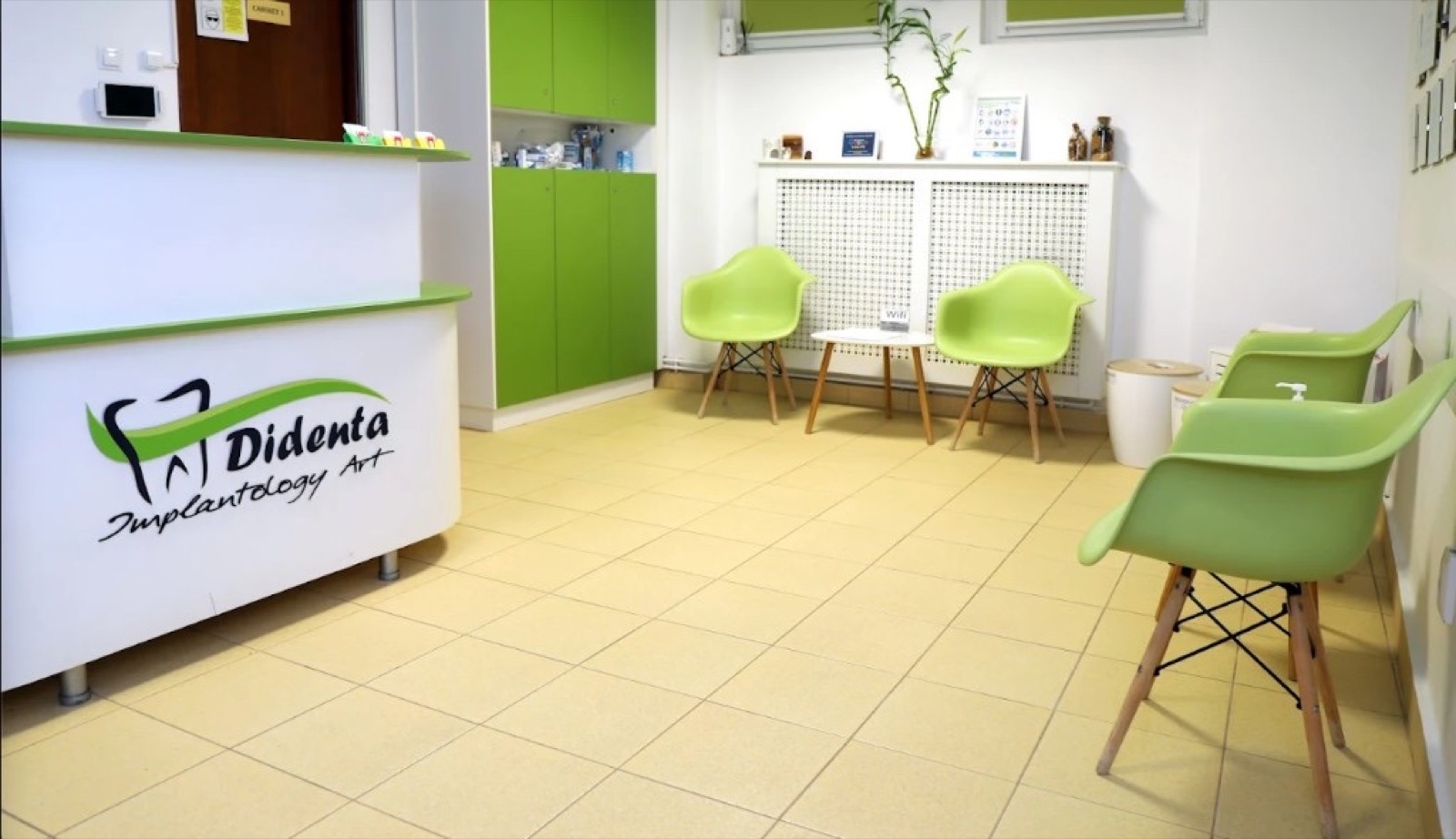
We do not treat only the problem. We understand the whole case.
Every patient arrives with a different clinical situation, history and goals. That is why the first step is not choosing a procedure, but correctly assessing the medical situation.
Depending on the complexity of the case, the process may include:
Clinical assessment
We analyse dental and oral health and identify the problems that need treatment.
Diagnosis and investigations
We use investigations and diagnostic technologies when they are needed for the fullest possible picture of the clinical situation.
Planning
We build a treatment plan around the patient’s needs, medical priorities, function and aesthetic goals.
Multidisciplinary approach
When the case requires it, specialists from different fields collaborate so that the stages of treatment are coordinated.
Treatment
Procedures are carried out according to the agreed plan, using the technologies and protocols suited to the clinical indication.
Monitoring
Treatment does not end with the last procedure. Assessing the result and recommendations for maintaining oral health are part of our long-term perspective.
A team of specialists, not just a list of doctors
Behind Didenta Implantology Art is a medical team with experience in areas such as implantology, oral surgery, prosthodontics, orthodontics, endodontics, general dentistry and dento-facial aesthetics.
Each clinician brings their own experience and field of expertise, and in complex cases these skills can be integrated into a single treatment plan.
This approach means patients do not have to connect different specialties on their own. The case is seen as a whole, and each stage is planned in relation to the others.
The clinician’s experience is supported by technology
Technology plays an important role in modern dentistry, but it does not replace clinical experience and judgement.
At Didenta Implantology Art, equipment is integrated where it can bring a real benefit to diagnosis, planning or treatment.
The clinic has technologies for:
- digital dental imaging
- 3D intraoral scanning
- digital CAD/CAM workflows
- implantology and oral surgery
- piezoelectric surgery
- laser treatments
- precision endodontics
- magnification
- prosthodontics and occlusal analysis
- inhalation sedation
- modern hygiene and sterilisation protocols
The aim is not to use as many technologies as possible, but to use the right technology when it can improve clinical care.
Medical protocols for predictable treatments
Quality treatment does not depend on a single moment or a single piece of equipment. It depends on following the right sequence of steps.
At Didenta Implantology Art, every case starts from diagnosis and continues through planning, preparation, treatment and monitoring of the result.
Depending on the procedure, clinical protocols focus on:
Correct diagnosis
Identifying the cause of the problem, not only treating the effect.
Individualised planning
Choosing treatment stages according to the patient’s particular situation.
Control of clinical stages
Following the protocols specific to each procedure.
Asepsis and sterilisation
Processing instruments and respecting hygiene and sterilisation procedures.
Communication with the patient
Explaining the diagnosis, alternatives and treatment stages in clear, accessible language.
Monitoring
Following progress and recommendations for maintaining the result.
Patient safety is part of treatment
Safety does not begin at the moment of the intervention and does not end afterwards.
In the clinic, medical instruments go through a controlled process of cleaning, packing and sterilisation, and the medical team follows specific hygiene and contamination-prevention protocols.
For us, sterilisation is not a presentation detail — it is an obligatory part of every day of clinical activity.
From treating a tooth to complex rehabilitations
Experience built over more than two decades has allowed us to develop an approach oriented towards cases that require collaboration between several specialties.
A patient may need, for example, endodontic treatment, surgery, implantology, orthodontics and then prosthodontics. These stages should not be seen in isolation.
When needed, treatment is built so that each stage prepares and supports the next.
This perspective is essential in complex oral rehabilitations, where function, tissue health and aesthetics must be planned together.
The relationship with the patient
We believe good treatment also means a well-informed patient.
That is why we aim to explain clearly:
- what problem has been identified
- what treatment options exist
- the advantages and limits of each option
- what the stages of treatment involve
- what recovery involves
- what is needed to maintain the result in the long term
Patients should be able to make an informed decision, understanding both the benefits and the limits of the proposed treatment.
A relationship built for the long term
Dentistry does not end once a restoration or an intervention is finished.
An implant, a prosthetic restoration, orthodontic treatment or a complex oral rehabilitation needs to be followed up and maintained over time.
That is why, at Didenta Implantology Art, we emphasise continuity of care, periodic check-ups, professional hygiene and personalised recommendations for maintaining oral health.
Our goal is not only for patients to leave with a more beautiful smile, but to benefit from a functional, stable result over the long term.
Didenta Implantology Art
- More than two decades of activity.
- A multidisciplinary medical team.
- Technology integrated into clinical care.
- Protocols oriented towards safety and precision.
- An approach built around the patient.
Since 2000, we have been developing Didenta Implantology Art with the same perspective: high-performance dentistry means experience, responsibility, technology and, above all, people who know how to use them together.