
Immediate implant placement after extraction
24 August, 2026
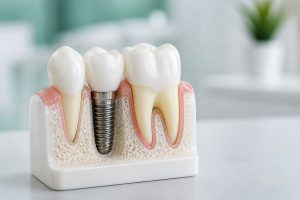
Losing a tooth can be an unpleasant experience, but modern dentistry has completely changed the way we restore a smile. Instead of waiting months for the bone to heal after an extraction, immediate implant placement allows you to leave the clinic with the implant in place and, in most cases, with a temporary crown, all in the same appointment.
At Didenta Implantology Art we use precise digital protocols so that the procedure is quick, minimally invasive and painless.
What is an immediate post-extraction implant?
With the traditional method, three to six months are needed after extraction for new bone to form before the implant is placed. Immediate placement means positioning the implant directly into the empty socket, straight after the unsalvageable tooth is removed.
The technique, step by step
The procedure is carefully planned and carried out to guarantee long-term success:
- 3D digital planning (CBCT): before the procedure we take a 3D dental scan to assess bone density and volume, as well as the position of important anatomical structures.
- Atraumatic extraction: the tooth is removed with particular care and special instruments, preserving as much of the bony walls and surrounding gum as possible.
- Implant placement: the implant is inserted into the tooth socket.
- Bone grafting where needed: the micro-gap between the implant and the bony wall is filled with biomaterial to ensure perfect integration.
- Immediate restoration: an abutment and a temporary crown are fitted, so that you never leave the clinic with a missing tooth.
Conditions required for an immediate implant
The main conditions for the immediate implant technique are:
- No acute infection at the root tip: an acute abscess or untreated purulent infection is a temporary contraindication.
- Adequate bone volume and quality: the bone remaining at the base of the socket must provide excellent primary stability for the implant.
- Intact socket walls: the bony walls of the extracted tooth must be as intact as possible.
- Healthy periodontal tissues: the gum and neighbouring tissues must be healthy, with no untreated periodontitis.
- Good general health: the patient must not have uncontrolled systemic conditions, such as uncontrolled diabetes or osteoporosis treated with bisphosphonates.
How is an immediate implant restored?
The restoration is completed in two distinct stages:
1. Immediate loading (the temporary crown)
Straight after the implant is placed, a temporary crown made of PMMA, a biocompatible acrylic, is attached. It restores appearance and helps the gum heal aesthetically around the new tooth. The temporary crown is kept out of the bite, so that heavy chewing forces do not destabilise the implant while it integrates with the bone.
2. The definitive restoration (after three to six months)
Once the implant has fully integrated with the bone, it is scanned digitally and the temporary crown is replaced with the definitive crown, which looks and works exactly like a natural tooth.
Benefits of immediate implant placement
- Shorter overall treatment: extraction, implant placement and the temporary restoration are completed in a single appointment.
- A single surgical stage, covering both the extraction and the implant placement.
- Psychological comfort: you leave with a tooth in place, even though an extraction has been carried out.
- Preservation of bone and gum: you avoid the bone resorption and gum recession that usually follow an ordinary extraction.
Do not let a missing tooth affect your confidence and quality of life. Book a consultation at Didenta Implantology Art to find out whether immediate implant placement is suitable in your case.