
Bruxism and night guard
25 August, 2026
Do you grind your teeth at night, or catch yourself clenching your jaw during stressful moments in the day? If you often wake with headaches, tension around the jaw joint or sensitive teeth for no obvious reason, you are very likely to be suffering from bruxism.
The condition affects a significant proportion of the population and, left untreated, leads to destruction of the enamel, fractured teeth and problems of the temporomandibular joint (TMJ).
Types of bruxism
Bruxism appears in two main forms:
- Nocturnal bruxism: occurs unconsciously during sleep. It is often accompanied by loud grinding and involuntary jaw movements.
- Daytime bruxism: clenching of the teeth during the day, in moments of intense concentration or stress, usually without grinding.
Why does bruxism appear?
Bruxism has multiple causes. Among the most frequent triggers are:
- Stress and anxiety: the emotional factor is the main cause of involuntary jaw clenching.
- An incorrect bite: misaligned teeth or old restorations force the chewing muscles to work abnormally.
- Sleep disorders: sleep apnoea and snoring are frequently associated with episodes of night-time bruxism.
- Lifestyle: excessive coffee, alcohol or tobacco, and certain stimulant medicines.
Modern treatment options for bruxism
At Didenta Implantology Art we treat bruxism as a whole, combining physical protection of the teeth with modern muscle relaxation therapies.
1. Occlusal balancing and orthodontic treatment
If bruxism is caused by an incorrect bite, correcting the alignment of the teeth with braces, or replacing faulty restorations, addresses the cause of the problem.
2. Bruxism splints
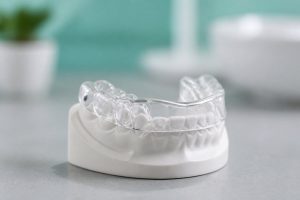
The splint is made from a special plastic on a digital impression of the patient and is worn at night. It creates a protective barrier between the arches, preventing wear of the enamel and reducing pressure on the jaw joint.
3. Laser therapy (photobiomodulation, PBM)
Laser technology is redefining the way we treat the pain and muscle tension caused by bruxism. With photobiomodulation, the laser beam penetrates deep into the joint and muscle tissues, stimulating cell regeneration, improving local blood flow and reducing inflammation. Overworked masseter muscles relax immediately, headaches and neck pain are relieved, and discomfort in the temporomandibular joint decreases.
4. Botulinum toxin injections (Botox)
Injecting small doses of botulinum toxin directly into the masseter muscles reduces excessive clenching force without affecting normal chewing or speech.
PRF infiltrations
Pain in the temporomandibular joint, clicking on opening the mouth, jaw locking and orofacial muscle pain seriously affect quality of life. When conventional methods, such as relaxation splints and anti-inflammatory drugs, bring only temporary relief, modern dentistry and maxillofacial surgery offer another route.
PRF therapy is a revolutionary alternative: a biostimulation and tissue regeneration treatment that relieves joint pain and inflammation without chemical substances or invasive surgery.
Injections of liquid PRF (i-PRF) placed inside the joint act directly on the biological cause of the pain:
- Strong anti-inflammatory effect: rapidly reduces swelling, inflammation of the joint capsule and abnormal synovial fluid.
- Regeneration of the joint cartilage: growth factors stimulate the chondrocytes to repair worn or damaged joint surfaces.
- Lubrication and mobility: the internal biological environment is restored, allowing the articular disc to glide more smoothly and reducing clicking.
- Long-lasting pain relief: by resolving chronic inflammation, local and referred pain in the temple, ear or throat decreases significantly.
Untreated, bruxism can lead to tooth loss, chronic headaches and irreversible damage to the jaw joint. By combining several modern treatments, we offer a complete plan tailored to your needs. Book a consultation at Didenta Implantology Art.